
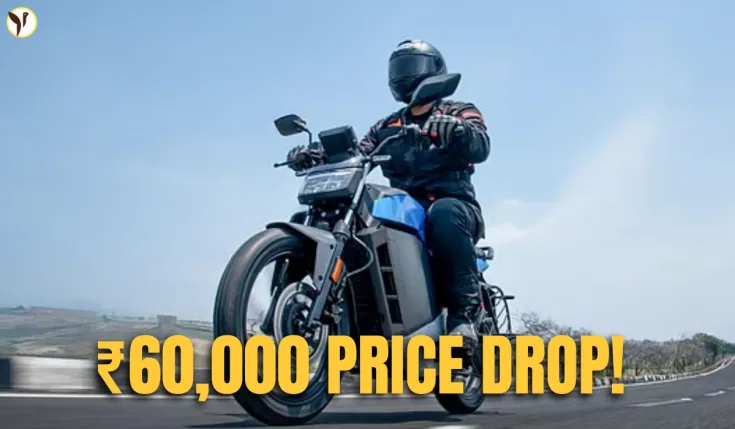

You’re looking at a rare moment in India’s EV space where prices actually go down instead of up. Ola Electric has cut the price of its electric motorcycle Roadster 9.1 by ₹60,000, and the reason behind it is just as important as the discount itself. This move is directly linked to the scaling of its in-house 4680 Bharat Cell production, which could reshape how affordable electric bikes become in India.
Why This Price Cut Is Getting Attention
When a company reduces prices in the EV segment, it usually signals something bigger. In this case, it’s not a festive offer or temporary discount. It’s tied to manufacturing efficiency.
Ola Electric is increasing production of its own battery cells, known as Bharat Cells. These are based on the 4680 format, a newer battery design aimed at improving performance while reducing costs.
As production scales, costs drop. That’s exactly what you’re seeing reflected in the Roadster 9.1’s new pricing.
What Has Changed in the Roadster 9.1 Pricing
The headline update is simple:
- Price reduced by ₹60,000
- Applies to the Roadster 9.1 electric motorcycle
- Linked to improved battery manufacturing efficiency
This is significant because battery costs typically make up a large portion of an EV’s price. When that cost comes down, the final product becomes more accessible.
How Bharat Cells Are Driving This Shift
You might be wondering what makes these “Bharat Cells” special.
The 4680 cell format refers to a cylindrical battery design that is:
- Larger than traditional cells
- More energy-dense
- Easier to manufacture at scale
- More cost-efficient over time
By producing these cells in-house, Ola Electric reduces dependency on external suppliers. That gives them more control over pricing, supply chain, and innovation.
For you as a buyer, this translates into better pricing and potentially improved performance in the future.
Quick Highlights You Should Know
- ₹60,000 price cut on Roadster 9.1
- Driven by scaling of 4680 Bharat Cell production
- In-house battery manufacturing reduces costs
- Signals long-term affordability strategy
- Could impact pricing across future EV models
A Bigger Trend: EV Prices May Start Coming Down
For a long time, EV adoption in India has faced one major challenge—pricing.
Electric two-wheelers often cost more upfront compared to petrol bikes. While running costs are lower, the initial price can be a barrier.
This move suggests a shift:
- As battery production scales, costs reduce
- Local manufacturing lowers import dependency
- Companies gain flexibility in pricing
If this trend continues, you could see more affordable EV options across different segments.
Roadster 9.1: What You Get
While the focus right now is on pricing, the Roadster 9.1 itself is positioned as a performance-oriented electric motorcycle.
|
|
|
|
|
|
|
|
|
|
|
|
|
|
|
|
|
|
|
|
|
Why This Matters If You’re Planning to Buy an EV
If you’re considering switching to electric, this update changes the equation slightly.
Here’s how:
- Lower upfront cost makes EVs more accessible
- Improved battery tech may offer better range and durability
- Local manufacturing could improve service and availability
At the same time, you should still evaluate:
- Charging infrastructure in your area
- Real-world range vs claimed range
- Service network support

