


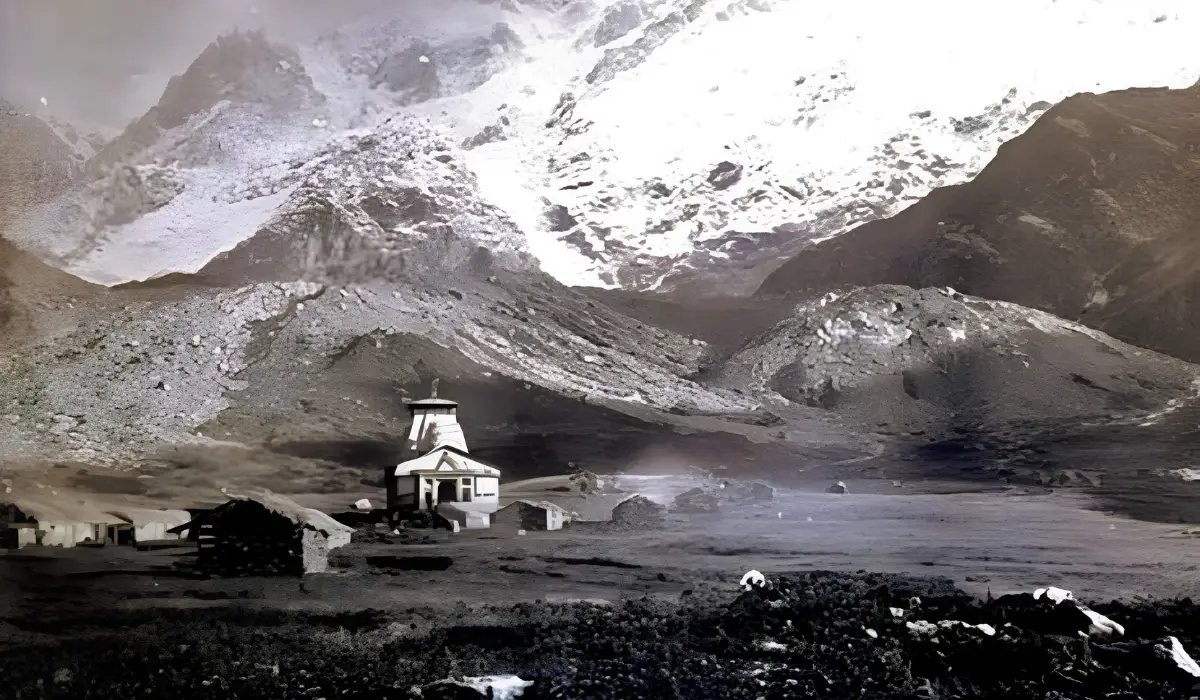
A single black-and-white photograph, taken in 1882, has done what thousands of op-eds couldn't — it stopped India mid-scroll, and made people ask a deeply uncomfortable question: What have we done to our most sacred places? On April 26, 2026, industrialist and Mahindra Group chairman Anand Mahindra posted what he described as one of the earliest known photographs of Kedarnath Dham on X (formerly Twitter). The image, taken in 1882, shows the ancient Shiva temple sitting peacefully amid snowy Himalayan peaks, with no roads, no railheads, and no helicopters in sight.The timing — right as the Kedarnath Yatra 2026 reached fever pitch — made the post land like thunder.
What the 1882 Photo Actually Shows — And Why It's Rare
The photograph in question is believed to be among the oldest visual records of Kedarnath Dham in existence. The image captures the shrine nestled high in the Garhwal Himalayas — an almost alien serenity, untouched and unreachable by any modern convenience.
Kedarnath sits at an altitude of 3,583 metres in Uttarakhand's Rudraprayag district. In 1882, reaching it was not a travel plan — it was a life event. The yatra demanded time, endurance, and complete surrender to the journey itself. There were no token systems, no QR codes, no helicopter pads. The mountain decided who made it.
That untouched quality is precisely what stopped Mahindra mid-scroll and, in turn, millions of others.
Why This Post Hit a Nerve Right Now
The photograph wasn't shared in a vacuum. It arrived in the middle of one of the most intense and chaotic Kedarnath Yatra seasons in recent memory.
The Kedarnath Temple opened on April 22, 2026, drawing approximately 38,000 devotees on the very first day. By the time the temple opened, over 19 lakh (1.9 million) pilgrims had already registered for the 2026 Yatra. The faith is undeniable. So is the strain.
Reports from the ground describe chaotic scenes — broken barricades, serpentine queues stretching for hours, and pilgrims waiting up to 15 hours for darshan. A viral video even showed devotees jumping barricades to bypass crowd controls.
What was once a meditative trek is increasingly being described as a rushed, stressful experience. Helicopter services, road expansions, and commercial facilities have shortened travel time but also intensified crowd density, often reducing the spiritual experience to a logistical challenge.
Mahindra's post landed squarely in the middle of all of this. Its implicit question — is easier access destroying the very thing we're trying to reach? — resonated deeply.
The Environmental Crisis Behind the Beautiful Photo
The contrast between the 1882 image and 2026 reality isn't just spiritual. It's ecological.
RTI data shows untreated waste keeps piling up around the shrine — over 21 metric tonnes in 2025 alone, with almost 60% left untreated in the middle of a fragile ecosystem. A separate viral video, circulating alongside Mahindra's post, showed polybags and debris cascading down a waterfall along the Yatra route — quickly dubbed the "Garbage Waterfall."
The ecological cost is alarming. The fragile Himalayan ecosystem around Kedarnath is under mounting pressure from the influx of pilgrims, with trekking routes reportedly littered with waste, while makeshift facilities struggle to manage sanitation for such large numbers.
Experts have warned that without sustainable practices, the environmental degradation around Kedarnath could become irreversible — a warning that feels all the more urgent when you hold the 1882 photograph against today's reality.
What Authorities Are Doing in 2026
To be fair, this is not a story of total inaction. The Uttarakhand government and temple administration have introduced significant structural changes for the 2026 season.
Under this token system, devotees are being allowed entry into the sanctum sanctorum for darshan at designated time slots, helping maintain effective crowd control and ensuring pilgrims have peaceful, orderly darshan without excessive waiting.
In a landmark decision ahead of the 2026 season, mobile phones and cameras are strictly banned inside the Kedarnath Temple complex — with the authorities' aim being to restore the sanctity and spiritual focus of the shrine and eliminate distractions that disrupt prayer.
Apparently, this is one of the earliest known photographs of the sacred Kedarnath Dham, taken in 1882.
— anand mahindra (@anandmahindra) April 26, 2026
Couldn’t take my eyes off it.
No roads. No railheads. No helicopters.
Just the abode of Lord Shiva, cradled by the Himalayas
Back then, the yatra demanded time, endurance,… pic.twitter.com/UfvWVsmLnf
A Bigger Question: Can Faith and Footfall Coexist?
Mahindra's post — intentionally or not — cuts to the heart of a debate that India's pilgrimage infrastructure has been avoiding for years. The Kedarnath Yatra today stands at a critical juncture: democratised access has opened the doors of faith to millions, but it risks turning a deeply spiritual journey into a crowded, commercialised experience.
That tension is not unique to Kedarnath. It echoes across every major pilgrimage site in the world. But in India, where the sacred and the everyday are inseparable, it hits differently. The 1882 photograph reminds us that Kedarnath has always been a place of power — long before the helicopters, long before the token queues. The mountain hasn't changed. The question is whether, in reaching for it more easily, we are losing what made the reaching matter.
What Happens Next
The Kedarnath Yatra 2026 season runs until approximately October–November, when winter snowfall forces closure. The temple remains open for only about six months, meaning the window for darshan is limited and careful planning is required.
Pressure is now on the Uttarakhand government to enforce stricter daily pilgrim caps, accelerate waste management infrastructure, and deepen environmental oversight — not just for this season, but as a permanent shift in how India manages its most sacred geography.
Anand Mahindra's photograph from 1882 will fade from the timeline in a few days. But the conversation it started — about what we owe our holy places, and what we're taking from them — that one has a much longer half-life.


