
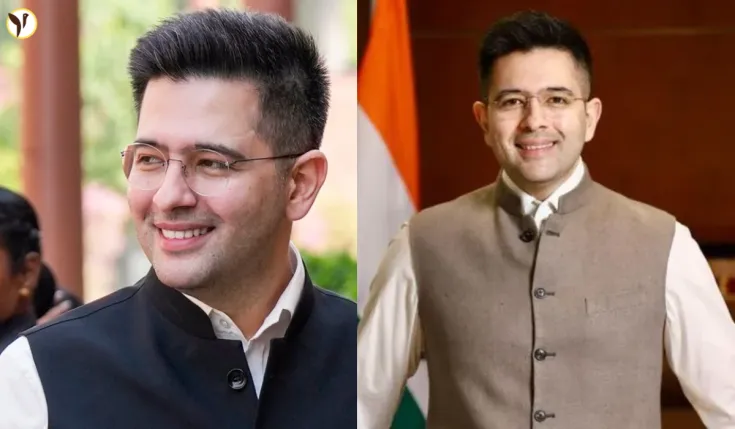

Raghav Chadha’s resignation from the Aam Aadmi Party has triggered one of the biggest political developments in recent times. The young Rajya Sabha MP from Punjab, once seen as a close aide of Arvind Kejriwal, has officially exited AAP along with six other Members of Parliament. All seven have reportedly aligned themselves with the Bharatiya Janata Party (BJP), marking a dramatic shift in India’s political balance, especially in the Upper House.
This development is not just about a few leaders switching parties. It directly impacts AAP’s strength in Parliament, raises questions about internal unity, and strengthens BJP’s position at the national level.
What Happened Within AAP Before the Big Exit
Raghav Chadha’s exit did not happen suddenly. According to political developments reported in recent weeks, tensions had been building within the party for some time. Chadha, known for his strong communication skills and parliamentary presence, was removed from his leadership position in the Rajya Sabha earlier this month. This move was seen as a major setback for him within the party structure.
Following this, Chadha publicly expressed dissatisfaction with how he was being treated within AAP. He also raised concerns about being sidelined in key parliamentary responsibilities. These internal disagreements eventually escalated into a full exit from the party. On April 23, Chadha officially stepped away from AAP. Soon after, six other Rajya Sabha MPs also joined him in aligning with the BJP, creating a significant political realignment.
#BREAKING | Raghav Chadha quits Aam Aadmi Party, to join BJP pic.twitter.com/sjLN1rV5Ew
— NDTV (@ndtv) April 24, 2026
MPs Who Joined Raghav Chadha in the Political Shift
Along with Raghav Chadha, the following Rajya Sabha MPs are part of this political shift:
- Sandeep Pathak
- Ashok Mittal
- Swati Maliwal
- Harbhajan Singh
- Vikram Sahney
- Rajinder Gupta
With this move, AAP’s representation in the Rajya Sabha has reduced sharply, leaving the party with only a small number of MPs in the Upper House. This is being seen as a major structural loss for AAP at the national level.
What This Change Means for AAP’s Strength in Rajya Sabha
The Rajya Sabha plays a key role in shaping national laws and policies. With seven MPs leaving, AAP’s influence in Parliament has weakened significantly.
For a party like AAP, which has focused largely on governance in Delhi and Punjab, parliamentary presence is important for maintaining national visibility.
This shift raises questions about internal stability and leadership coordination within the party. Political observers believe it could also affect AAP’s preparations for upcoming state elections in Delhi and Punjab.
How BJP Strengthens Its Position in the Rajya Sabha After This Move
For the Bharatiya Janata Party, this development strengthens its position in Parliament without requiring a formal electoral contest. With additional MPs joining its side, BJP’s ability to pass legislation in the Rajya Sabha becomes easier. This is especially important for key policy decisions and long-term governance plans. Political analysts also point out that the inclusion of experienced and high-profile leaders adds both numerical and symbolic value to BJP’s position. Among the new entrants, names like Harbhajan Singh and Swati Maliwal bring recognition from sports and social activism backgrounds, which may help BJP expand its reach in different voter segments.

Impact of This Development on India’s Opposition Landscape
This development also impacts the broader opposition alliance dynamics in India. AAP is part of the INDIA alliance, which was formed to challenge BJP at the national level. A major internal split weakens the perception of unity within the opposition. If more leaders follow similar paths, it could create further challenges for coordination among opposition parties in future elections.
Why Parliament Rules Allow This Political Shift
A key aspect of this development is that none of the MPs are expected to lose their seats immediately. Under India’s anti-defection law, if two-thirds of a group within a party merges with another party, it is not treated as defection. Instead, it is considered a legal merger. This is why the MPs who moved along with Raghav Chadha are not facing disqualification proceedings.


