
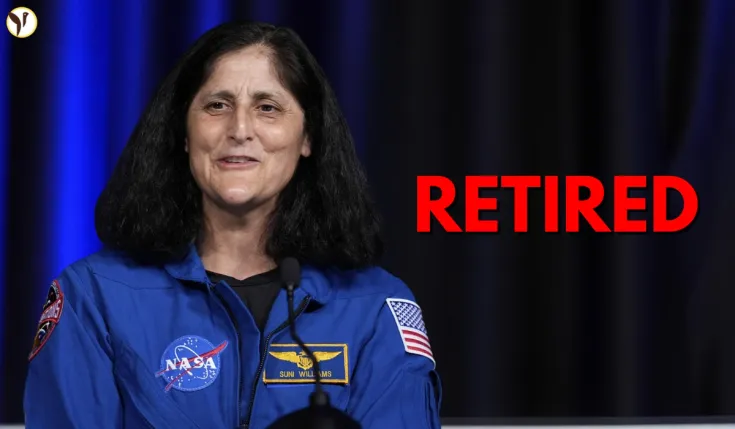

NASA astronaut Sunita Williams has retired after an incredible 27-year career, marking the end of an era in space exploration. From a Navy pilot to a record-breaking astronaut, her journey has inspired millions around the world, especially in India. Known for her courage, dedication, and trailblazing achievements, Sunita set multiple space records and became a symbol of perseverance. This article covers her full career, key missions, milestones, and legacy.
Sunita Williams Early Life and NASA Career Beginnings
Sunita Williams was born on September 19, 1965, in Euclid, Ohio, to an Indian father from Gujarat and a Slovenian-American mother. Her family loved adventure, and she developed a passion for flying early on. She earned a degree in physical science from the U.S. Naval Academy and a master’s in engineering management. Joining the U.S. Navy as a helicopter pilot, she logged over 3,000 flight hours and completed 30 sea deployments. In 1998, NASA selected her from thousands of applicants as one of 32 astronaut candidates. Her training involved survival drills, spacewalk practice, and robotics operation, preparing her for an extraordinary space career.
NASA Retirement Announcement: Sunita Williams Officially Retires From NASA
NASA announced her retirement on January 20, 2026, effective December 27, 2025. Sunita called space her "favorite place," while NASA Administrator Jared Isaacman praised her as a trailblazer for Artemis missions. Her retirement was quiet and focused on her legacy rather than the spotlight. She plans to continue inspiring youth through speaking and mentoring.
𝐒𝐮𝐧𝐢𝐭𝐚 𝐖𝐢𝐥𝐥𝐢𝐚𝐦𝐬 𝐫𝐞𝐭𝐢𝐫𝐞𝐬 𝐟𝐫𝐨𝐦 𝐍𝐀𝐒𝐀 𝐚𝐟𝐭𝐞𝐫 𝟐𝟕 𝐲𝐞𝐚𝐫𝐬 𝐨𝐟 𝐬𝐞𝐫𝐯𝐢𝐜𝐞.
— All India Radio News (@airnewsalerts) January 21, 2026
The Indian-origin astronaut first flew in 2006 aboard Space Shuttle #Discovery, commanded the ISS during Expedition 33, and most recently led #Expedition 72 during… pic.twitter.com/keekGjXimR
Sunita Williams’ Space Missions at the International Space Station
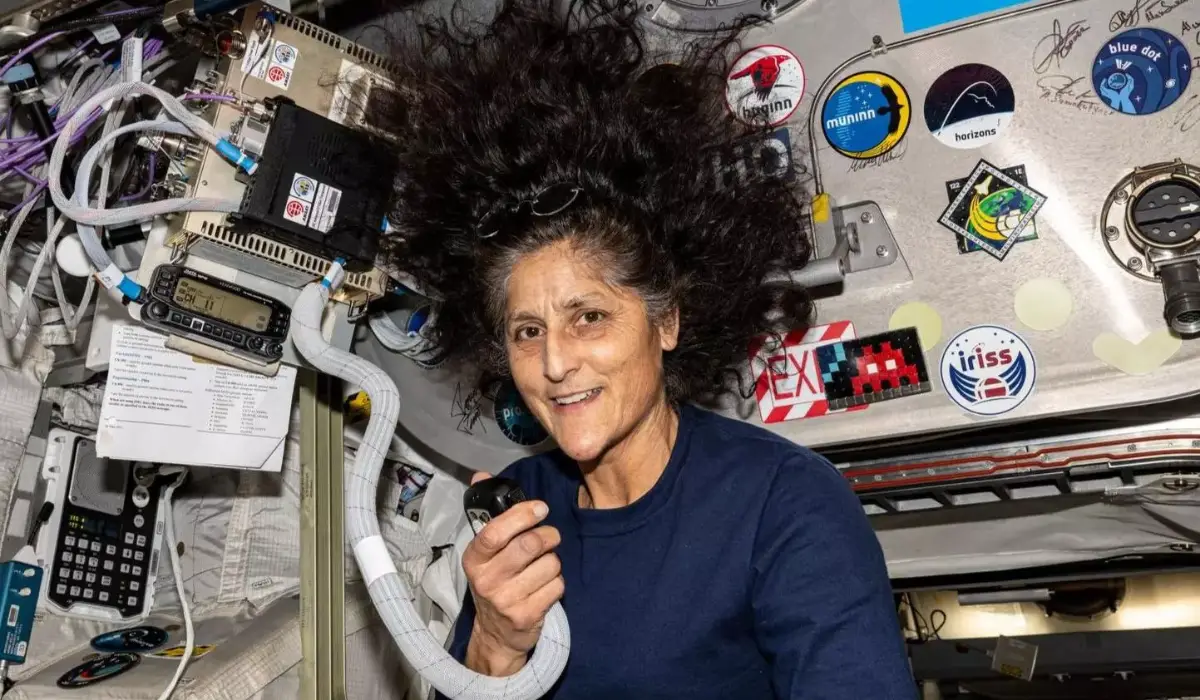
- Expedition 14/15 (2006–07): Sunita Williams’ first space mission lasted 194 days aboard the ISS. She carried out four spacewalks, helped repair solar panels, and became the first woman to run a marathon in space, highlighting human endurance in zero gravity.
- Expedition 32/33 (2012): During her second mission, Sunita served as Commander of the International Space Station. She conducted three spacewalks, fixed critical power systems, and completed the first-ever triathlon in space, proving astronauts can stay fit during long missions.
- Starliner ISS Mission (2024–25): Her final mission began as a short test flight but extended to over nine months due to technical issues. This mission pushed her total time in space to 608 days and provided vital data for future Moon and Mars missions.
Sunita Williams Space Records and Achievements
Sunita Williams holds several historic space records:
- Second-most days in space for female astronauts (608 days).
- Most spacewalk hours by a woman: 62 hours across nine spacewalks.
- First female ISS commander.
- First woman to complete a marathon and a triathlon in space.
- Received six NASA Spaceflight medals and India’s Padma Bhushan (2015).
Her work advanced robotics, station repairs, and scientific experiments, supporting future lunar and Martian missions.
Sunita Williams Personal Life and Family Support
Sunita is married to Michael J. Williams, a fellow Navy officer, since 1987. They have two children, Karina and Sri. Her family supported her long missions, balancing professional and personal life. Hobbies include running, swimming, and hiking, and she plans to pursue adventure travel post-retirement.
Impact of Sunita Williams on India and Global Inspiration
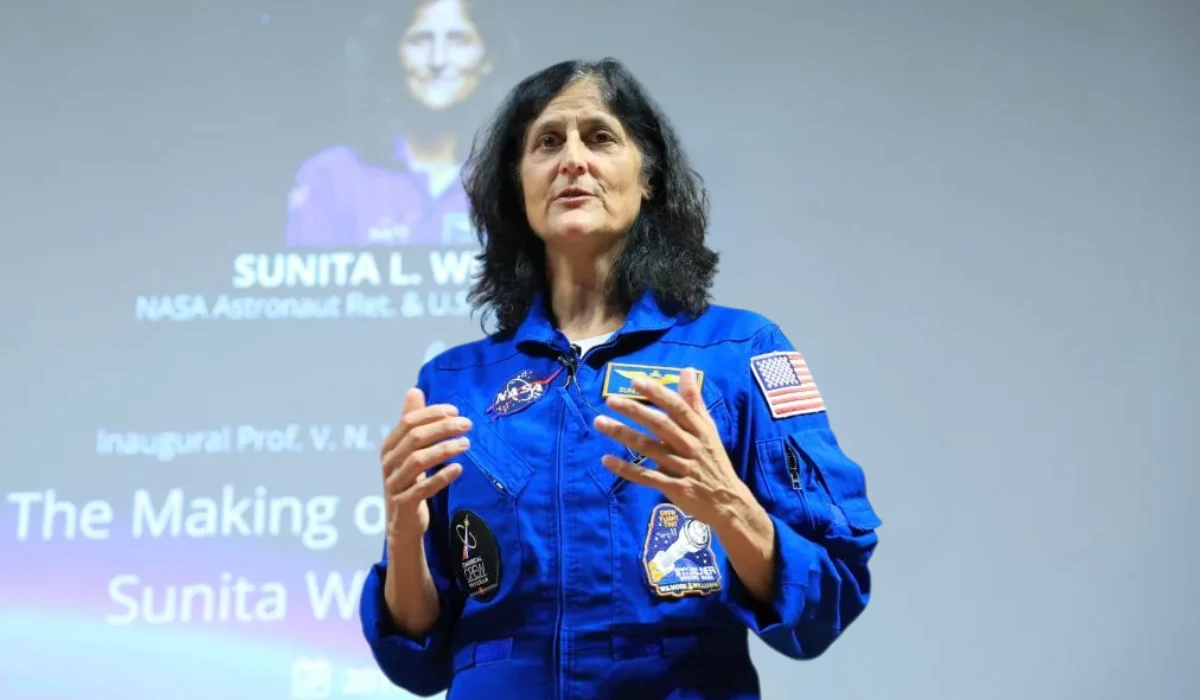
As an Indo-American icon, Sunita has a special connection with India. She met Prime Minister Narendra Modi, inspired STEM education, and became a role model for girls in science. Her calmness during technical issues and record-setting achievements continues to inspire astronauts and students worldwide.
Legacy and Future of Space Exploration
Sunita’s work paved the way for Artemis Moon missions and commercial spaceflight. Her endurance and problem-solving experience are vital for Mars missions in the 2030s. She leaves behind a 27-year legacy of bravery, innovation, and inspiration for future explorers.


