
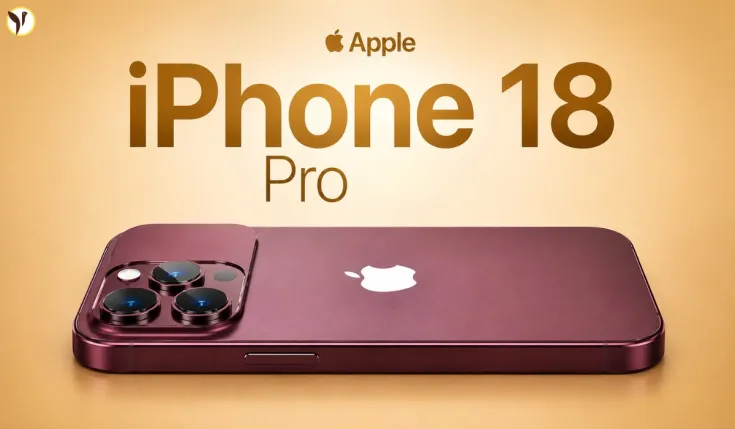

Apple’s iPhone 18 Pro is shaping up to be a refinement-heavy upgrade rather than a radical redesign, but the latest leaks suggest the changes could still be meaningful where users care most: the display cutout, camera system, and battery life. Recent reports point to a smaller Dynamic Island, a thicker camera module, a variable-aperture main camera, and a bigger battery supported by more efficient silicon.
What the Leaks Actually Say — And Why This Time Feels Different
Apple is still months away from its expected September 2026 event, but the iPhone 18 Pro may already be the most thoroughly leaked flagship the company has ever prepared. Between CAD schematics, alleged prototype images, dummy unit hands-on videos, and corroborating supply-chain reports from multiple independent sources, a clear picture is forming — and it's more refined than radical.
Here's the short version: the Dynamic Island is shrinking significantly, the camera is getting its biggest hardware upgrade in years, the processor is leaping to 2nm, and the battery is growing to record territory for an iPhone. None of this is confirmed by Apple. But when leakers like Mark Gurman (Bloomberg), Jon Prosser (Front Page Tech), Weibo insider Instant Digital, and renowned tipster ShrimpApplePro all converge on the same story, it warrants serious attention.
Dynamic Island: Not Gone, But Noticeably Smaller
The single most discussed design change is what's happening to the front of the phone. For months, reports swung wildly — some suggesting Apple would eliminate the Dynamic Island entirely in favor of under-display Face ID, others pointing to a subtle tweak.
By May 2026, the consensus has settled: the Dynamic Island is staying, but it's getting a meaningful reduction in size — approximately 25 to 35 percent smaller than the current pill-shaped cutout introduced with the iPhone 14 Pro in 2022.
The engineering behind this shift matters. Apple is reportedly moving select Face ID infrared sensors beneath the display for the first time — a technical milestone that frees up physical space and allows the front camera cutout to shrink considerably. An alleged real-world prototype image that circulated in early May appeared to confirm this, with the cutout visibly narrower than the iPhone 17 Pro's.
Why this matters to users: The Dynamic Island, while clever, has always occupied a noticeable chunk of the top-center display. Shrinking it by a third means more usable screen real estate, a cleaner status bar, and a subtle but tangible step toward the all-screen iPhone that Apple has been inching toward since the original notch era.
This would also mark the first physical refinement to the Dynamic Island since its debut — four generations in, Apple is finally updating the hardware, not just the software animations around it.
Camera System: The Variable Aperture Breakthrough
For years, serious mobile photographers have pointed to the one thing Apple has never done — physically adjustable aperture. That's reportedly changing with the iPhone 18 Pro.
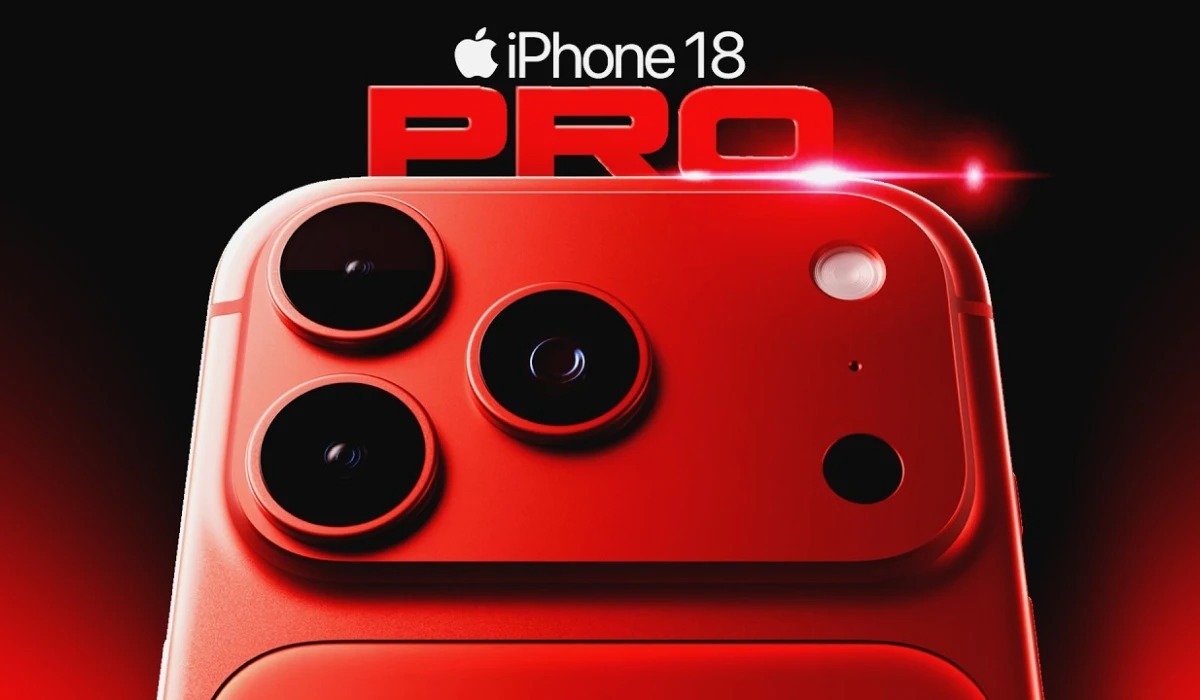
Leaked supply-chain reports and CAD renders suggest the 48MP main camera on the iPhone 18 Pro will feature a mechanical variable aperture system, allowing the lens to physically open and close between approximately f/1.5 and f/2.4. This is not a software simulation; it's hardware-level light control.
What that unlocks in practice:
- Better low-light performance at f/1.5 for night scenes and indoor photography
- Improved depth-of-field control for portrait-style shots without relying solely on computational tricks
- More accurate bokeh that behaves like a real camera lens, not an AI estimation
- Reduced overexposure in bright outdoor conditions by stopping down to f/2.4
Alongside variable aperture, leaks point to an upgraded telephoto system, enhanced zoom capabilities, and a Camera Control 2.0 interface — a revised version of the hardware button introduced on the iPhone 16 Pro, reportedly simplified based on user adoption data that suggested the original design was underutilized.
The bigger picture: Apple has largely won the smartphone camera wars through computational photography. This move toward mechanical hardware upgrades signals a maturation of the platform — bridging the gap between mobile photography and professional imaging in a way software alone cannot replicate.
A20 Pro Chip: The 2nm Leap and What It Actually Means
Under the hood, the iPhone 18 Pro is expected to debut Apple's A20 Pro chip, built on TSMC's cutting-edge 2-nanometer process — a significant step down from the current 3nm architecture powering the A19 series.
|
|
|
|
|
|
|
|
|
|
|
|
|
|
|
|
|
|
|
|
|
|
|
|
|
|
|
|
|
|
|
|
The WMCM (Wafer-Level Multi-Chip Module) packaging is particularly notable. This technology places RAM directly adjacent to the CPU, GPU, and Neural Engine, dramatically reducing latency in AI processing. For users, the real-world translation is faster Siri responses, smoother on-device AI features, better multitasking, and improved performance in console-quality gaming.
Analyst Ming-Chi Kuo, one of the most accurate Apple supply-chain observers, had previously projected that 2nm chips would initially be limited to Pro models but later updated his forecast to suggest the entire iPhone 18 lineup may benefit from TSMC's 2nm process. The Pro models, however, are expected to receive the more advanced A20 Pro variant with additional performance headroom.
Battery: Finally Breaking the All-Day Barrier
Battery life has been one of the most persistent criticisms of the iPhone Pro lineup compared to Android flagships. The iPhone 18 Pro Max appears set to take a meaningful step forward.
Multiple sources point to a battery capacity of 5,100–5,200mAh for the Pro Max, which would make it the largest battery ever shipped in an iPhone — surpassing the current record holder, the iPhone 16 Pro Max.
The weight consequence is real: the iPhone 18 Pro Max is reportedly tracking toward approximately 243 grams, which would make it the heaviest iPhone produced. Whether that's acceptable is a personal judgment call, but for users who have historically found Pro Max battery life merely adequate, the trade-off may be worthwhile.
Crucially, the battery story is amplified by the A20 chip's estimated 30% efficiency improvement. The combination of a physically larger cell and a significantly more efficient processor should compound into real-world gains — not just benchmark improvements.
Colors, Design Details & What Else Is Changing
Beyond the headline features, leaks paint a fuller picture of the iPhone 18 Pro's aesthetic direction:
New color palette: Apple is reportedly retiring Cosmic Orange (introduced on the iPhone 17 Pro) in favor of new options including Dark Cherry (a deep burgundy expected to be the standout hue of 2026), Light Blue, and updated Silver/Natural Titanium variants.
Rear panel refinement: The two-tone look — where the glass section differs slightly from the aluminum frame — is reportedly being phased out in favor of a more uniform finish, creating a cleaner overall appearance.
C2 Modem: The iPhone 18 Pro is expected to debut Apple's custom C2 modem, replacing the current Qualcomm hardware. The C2 is said to support mmWave 5G alongside expanded satellite connectivity using NR-NTN standards — potentially enabling full internet access via satellite in areas without cellular coverage. Apple reportedly collaborated with Amazon (which acquired Globalstar in early 2026) to power this functionality.
Split release strategy: Multiple corroborating sources suggest Apple will shift to two annual iPhone events starting in 2026 — Pro models launching in September, base models debuting in early 2027. This would mean the iPhone 18 Pro and Pro Max arrive on schedule, while the standard iPhone 18 follows in early 2027.
iPhone 18 Pro kılıfları ilk kez ortaya çıktı: iPhone 17 Pro ile uyumlu değil: iPhone 18 Pro ve Pro Max’e ait ilk kılıf görselleri sızdı. Apple’ın mevcut tasarımı koruduğu görülürken, büyüyen kamera modülü nedeniyle iPhone 17 Pro kılıfları uyumsuz olabili… https://t.co/V0XGooYRvv pic.twitter.com/Y13C5Coxuh
— TeknolojiMAG (@teknolojimag) May 18, 2026
What Happens Next: The Road to September 2026
The expected timeline looks roughly like this:
|
|
|
|
|
|
|
|
|
|
|
|
|
|
|
|
|
|
|
|
|
The event would also reportedly introduce the long-anticipated iPhone Fold (or "iPhone Ultra"), Apple's first foldable iPhone, making the fall 2026 event potentially the most significant Apple product announcement in years.
Analyst Take: Refinement, Not Revolution — And That's Fine
It would be tempting to frame the iPhone 18 Pro as a disappointment because it doesn't reinvent the wheel. But the more honest framing is that Apple is making the right improvements in the right places.
The Dynamic Island shrinkage addresses a genuine aesthetic frustration. Variable aperture fixes a hardware limitation that computational tricks could never fully solve. The 2nm chip and larger battery tackle the two most practical daily concerns — speed and endurance. And the C2 modem future-proofs connectivity.
For iPhone 15 Pro and older users, this is likely a compelling upgrade cycle. For iPhone 17 Pro owners, the variable aperture camera and smaller Dynamic Island may be the nudge needed. Either way, Apple appears to be building a phone people will genuinely notice an improvement in — which is ultimately the point.


