
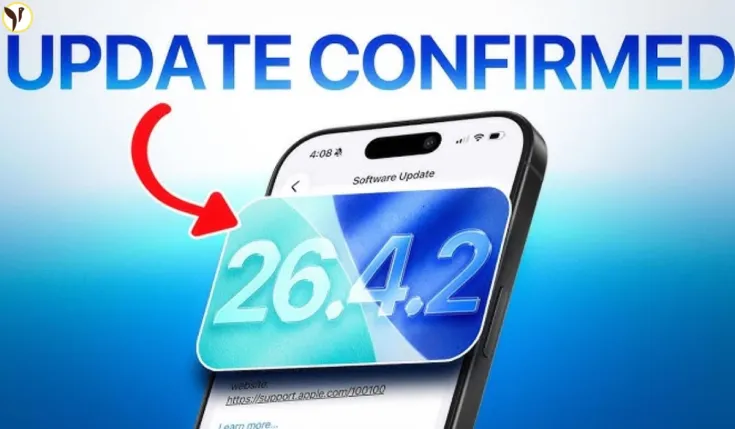

Apple released emergency patches on April 22, 2026, after it emerged that the FBI quietly exploited a flaw in iOS to extract deleted private messages from a suspect's iPhone — messages the owner believed were permanently gone.
What Just Happened
The iOS 26.4.2, iPadOS 26.4.2, iOS 18.7.8, and iPadOS 18.7.8 updates released by Apple on April 22 address a security vulnerability that the FBI recently used to extract Signal message previews from an iPhone even after the app was deleted.
The vulnerability, tracked as CVE-2026-28950, wasn't a hacker's exploit or a remote-execution zero-day. It was quieter — and in some ways more unsettling. According to Apple, "notifications marked for deletion could be unexpectedly retained" on the device due to a logging issue that failed to redact data properly.
In plain terms: when you deleted a notification — or uninstalled an app entirely — the message content wasn't actually erased from your iPhone's internal storage. It sat there, silently, until someone with physical access and the right forensic tools went looking for it.
The FBI Case That Forced Apple's Hand
On April 9, 2026, 404 Media published an article revealing how the FBI was able to extract copies of incoming Signal messages from a defendant's iPhone, even though the Signal app had been deleted. The messages were preserved in the phone's notification database.
The iPhone in question was set to display the content of Signal messages on the Lock Screen, and with that feature enabled, the iPhone stores message content. The defendant had deleted the Signal app and had Signal messages set to disappear, but the iPhone kept the messages in its database long enough for the FBI to access them.
Signal is specifically built around privacy — end-to-end encryption, disappearing messages, no cloud backups. The irony is stark: the messages never left Signal's encrypted channel, but iOS itself kept a record of the notification previews. Apple doesn't acknowledge the connection, but it seems likely that this triggered the releases of iOS 26.4.2 and iOS 18.7.8.
Who Is Actually at Risk?
This is where measured perspective matters. This vulnerability primarily raises privacy concerns for anyone who worries about a government entity seizing their iPhone and using specialized forensic software on it. For most everyday users, the immediate risk is low — exploiting this flaw requires physical device access plus professional forensic tools.
However, context matters enormously. Campaigns that start with diplomats, journalists, or executives often lead to tooling and exploits leaking or being repurposed, so "I'm not a target" is not a viable long-term safety strategy.
Beyond law enforcement scenarios, the vulnerability exposes a broader truth: data you believe you've deleted may still exist on your device. This applies to anyone who:
- Uses privacy-focused messaging apps (Signal, Telegram, WhatsApp)
- Has lock-screen notification previews enabled
- Relies on disappearing messages as a core privacy measure
The Technical Fix — What Apple Actually Changed
iOS 26.4.2 is available on iPhone 11 and later, iPad Pro 12.9-inch 3rd generation and later, iPad Pro 11-inch 1st generation and later, iPad Air 3rd generation and later, iPad 8th generation and later, and iPad mini 5th generation and later.
Apple's fix operates at the logging layer of the Notification Services framework — it improves data redaction so that when a notification is flagged for removal, its content is actually wiped rather than merely de-indexed. The vulnerability is tracked as CVE-2026-28950.
The security issue also affects devices that do not support iOS 26. For these, Apple also released iOS 18.7.8 and iPadOS 18.7.8. These do not contain new features and only bring the fix for CVE-2026-28950.
The Bigger iOS Security Picture
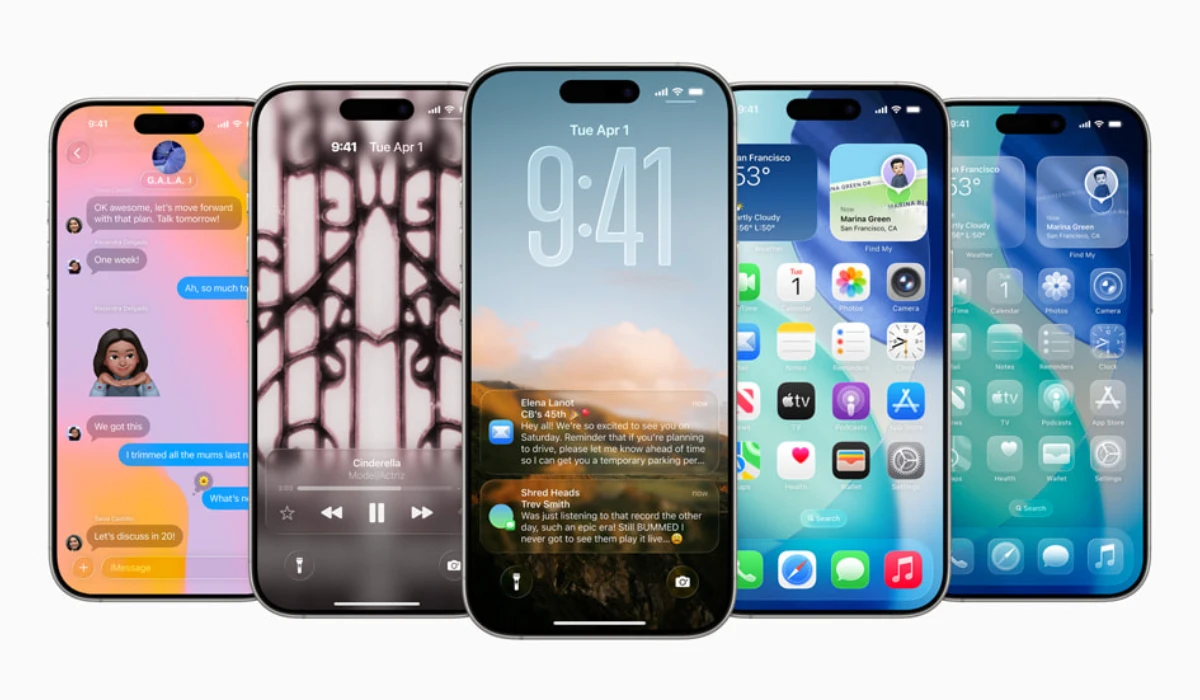
This patch doesn't exist in isolation. Apple has been playing catch-up on iOS security since late 2025. This is happening because of some really bad security breaches like DarkSword and Coruna — exploits that forced Apple to take the unusual step of pushing iOS 18 security updates to users capable of running iOS 26, just to get more devices protected faster.
As of January 2026, only about 4.6% of active iPhones were on iOS 26.2, and roughly 16% were on any version of iOS 26, leaving the vast majority on older releases such as iOS 18. Slow adoption — partly driven by resistance to the new Liquid Glass interface — has left millions of iPhones in a prolonged security gray zone.
What You Should Do Right Now
If you're on iOS 26: Update to 26.4.2 immediately via Settings → General → Software Update.
If you're on iOS 18: Update to 18.7.8. The default update shown in Settings → General → Software Update will be iOS 26, but you will have the option to select iOS 18.7.8. If you would like to stay on iOS 18, you need to make sure that Automatic Updates are turned off, since iOS 26 is now the default update and your iPhone may download and install it in the background.
Additional steps worth taking today:
- Disable lock-screen notification previews for sensitive apps (Settings → Notifications → [App] → Show Previews → Never)
- Restart your iPhone weekly — the NSA formally recommends this practice
- If you're a journalist, activist, or executive: consider enabling Lockdown Mode for the strongest available protection
Apple releases iOS 26.4.2 for iPhone, here’s what’s new
— Pride Colors=Red/White/Blue🚫Rainbow🇺🇸🇬🇧🇮🇱 (@LgbPatriots) April 23, 2026
😬wondering what @Apple fucked up this time? https://t.co/troeqZylZE
What Comes Next
Apple is already beta testing iOS 26.5, which will bring changes to Apple Maps, messaging, and other improvements, and is expected ahead of the iOS 27 announcement at WWDC 2026.Security cadence will likely tighten further as forensic capabilities in law enforcement tools continue to advance.
The deeper story here is about the gap between what users believe about privacy and what is actually happening on the device. Deleting an app does not guarantee its data is gone. Disappearing messages are only as reliable as every layer of the stack — and this case proved that one overlooked logging bug can unravel that assumption entirely.
Apple's response was swift once the issue surfaced publicly. Whether the flaw went unnoticed — or unaddressed — before the FBI case became public record is a question the company has not answered.


