
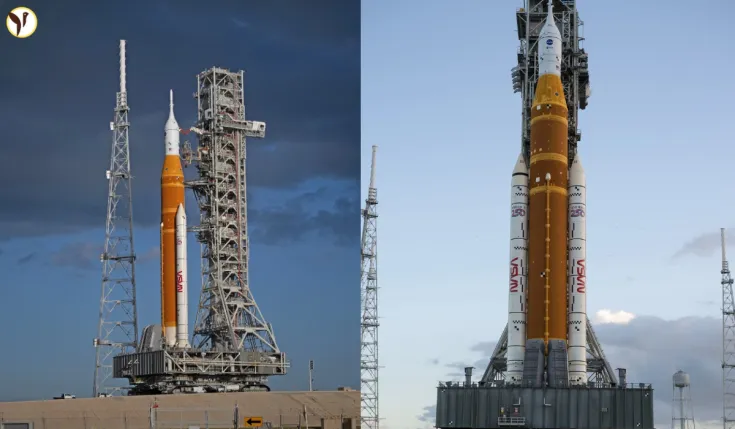

NASA has confirmed that Artemis II will launch no earlier than April 1, 2026. This will be the first crewed mission to fly humans around the Moon in over 50 years. Unlike Apollo missions, the spacecraft will orbit the Moon without landing, carrying four astronauts on a 10-day journey. The mission will test the Orion spacecraft with humans aboard and prepare the way for future Moon landings. Artemis II marks a major step in deep-space exploration for NASA and its partners.
Artemis II and How NASA Plans to Fly Humans Around the Moon
Artemis II is the second flight of NASA’s Artemis programme, and the first time humans will travel to the Moon since Apollo 17 in 1972. Instead of landing, the crew will fly around the Moon and return to Earth using a “free-return” path guided by the Moon’s gravity.
This mission will use the Space Launch System (SLS) rocket and the Orion spacecraft, first tested without humans on Artemis I in 2022. Artemis II will ensure all systems, including life support, navigation, and communication, are safe for astronauts.
The Importance of Artemis II for NASA and Space Travel
Artemis II is historic as the first crewed deep-space flight to the Moon since the 1970s. For decades, astronauts have only flown to low Earth orbit, like the International Space Station, but Artemis II will take humans farther than ever before. This mission will also:
- Test the Orion spacecraft in real crew conditions for the first time.
- Help NASA learn how to safely send humans to work around the Moon and eventually land on its surface.
- Include an astronaut from the Canadian Space Agency (CSA), marking a major international step in lunar exploration.
Crew Members of the Artemis II Mission
The Artemis II crew has four astronauts:
- Reid Wiseman (NASA, USA) – Mission commander
- Christina Hammock Koch (NASA, USA) – Pilot
- Victor J. Glover (NASA, USA) – Pilot/mission specialist
- Jeremy Hansen (Canadian Space Agency, Canada) – Mission specialist
This will be the first time a Canadian astronaut flies around the Moon, and Christina Koch will fly farther from Earth than any woman has ever gone. The crew has trained for years in simulations, spacecraft handling, and emergency procedures for the 10-day trip.
On April 1, NASA is set to launch Artemis II — the first crewed mission to journey around the Moon in over half a century.
— DARKROADduoProject (BluesBirds©) walkin/playin 2x2 (@BluesBirds99) March 27, 2026
Safe travels... 🚀🪐🌕🌑☄️🛸 pic.twitter.com/tcp9C5owBT
Artemis II Mission Duration and Timeline
Artemis II is expected to be a 10-day mission in total. The journey from Earth to the Moon will take roughly three days, after which the crew will spend about one day orbiting near the Moon. Following the flyby, the spacecraft will make its way back to Earth over several days. The mission will use a free-return trajectory, which allows the Moon’s gravity to bend the path back toward Earth, providing an extra layer of safety in case of engine issues.
Experiments and Observations During Artemis II
During the lunar flyby, the Artemis II crew will focus on testing spacecraft systems in real deep-space conditions, observing the Moon’s surface—including the far side that never faces Earth—and practicing communication, navigation, and emergency procedures far from home. This mission also has the potential to set a new record for the farthest distance humans have traveled from Earth, surpassing the milestone reached by the Apollo 13 astronauts in 1970.
How is Artemis II different from Artemis I
|
|
|
|
|
|
|
|
|
|
|
|
|
|
|
|
|
|
|
|
Artemis I flew around the Moon in 2022 without astronauts to successfully test the rocket and spacecraft. Artemis II will now put real people on the same flight to ensure it’s safe for future Moon landings.
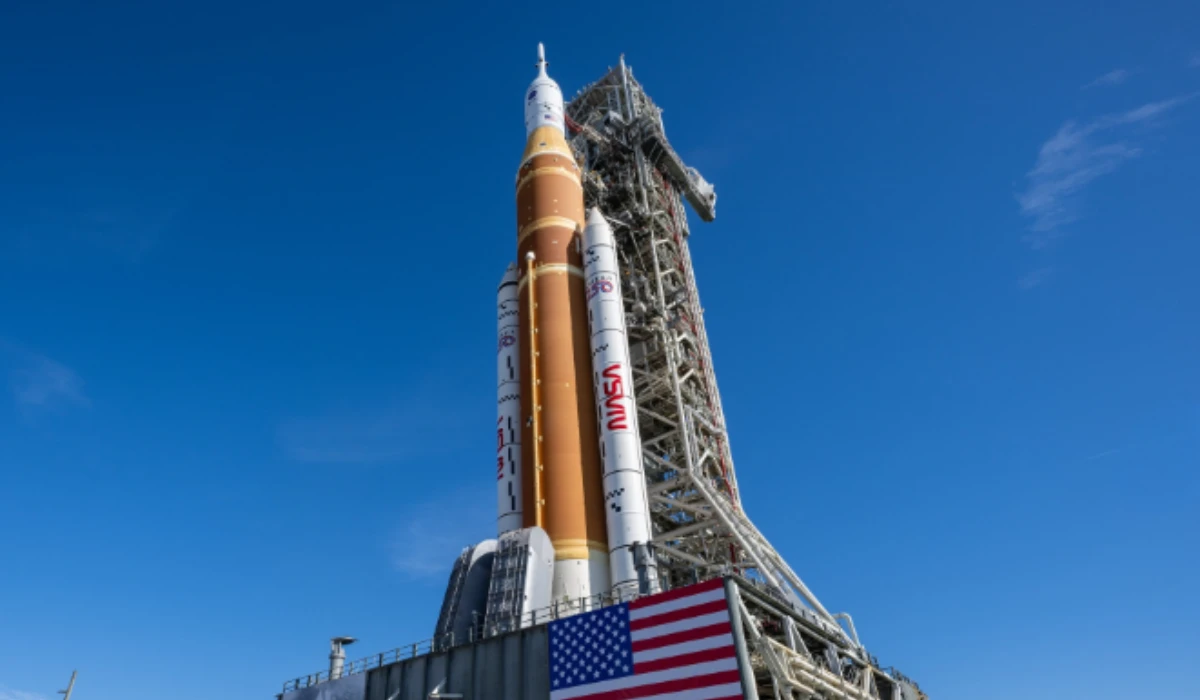
How can you watch the Artemis II launch
NASA plans to broadcast the launch live on its official website and YouTube channel, starting several hours before liftoff. Expect:
- Commentary from NASA engineers and mission specialists.
- Close-up views of the SLS rocket on the launchpad.
- Real-time updates on weather, countdown, and post-launch status.
For in-person viewing, the Kennedy Space Center Visitor Complex in Florida offers Artemis II launch-viewing packages, though availability depends on the final launch date.


