
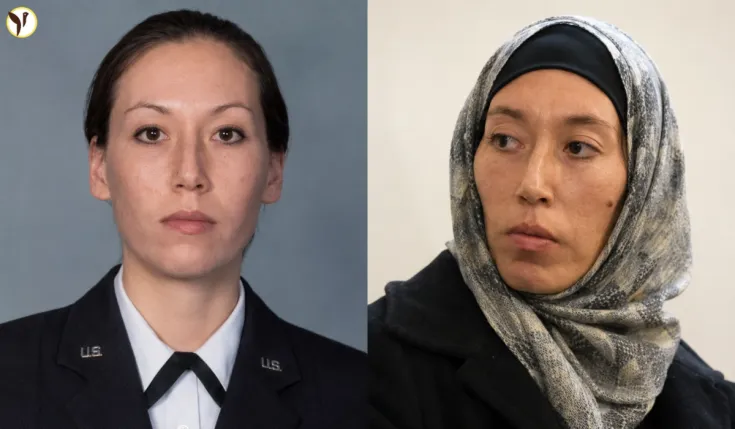

A decorated counterintelligence officer once trusted with America's most guarded secrets now tops the FBI's most-wanted list — and the bureau is making clear it hasn't given up.
On Thursday, May 14, 2026, the FBI's Washington Field Office announced a $200,000 reward for information leading to the arrest of Monica Elfriede Witt, 47 — a former U.S. Air Force counterintelligence specialist indicted in 2019 for allegedly defecting to Iran, sharing classified national defense information with the Islamic Republic, and helping Iranian operatives target her own former colleagues.
The bounty, released during what FBI officials called a "critical moment in Iran's history," is more than just a financial incentive. It signals that the United States intelligence community, despite more than a decade passing since Witt's defection, has not shelved one of the most consequential insider betrayals in modern American espionage history.
Who Is Monica Elfriede Witt?
Born in Texas, Monica Witt joined the U.S. Air Force in 1997 and was trained in the Farsi language — a skill that would later make her exceptionally valuable, both to the United States and, allegedly, to Iran. During her 11 years of active duty, she operated as an intelligence specialist and special agent for the Air Force Office of Special Investigations (AFOSI), conducting classified counterintelligence missions in Iraq, Saudi Arabia, and Qatar.
She left active military service in 2008 but continued working as a Defense Department contractor until 2010 — maintaining security clearances and, crucially, deep institutional knowledge of U.S. intelligence infrastructure.
Inside the government, she was known by a codename: "Wayward Storm." It would prove prophetically apt.
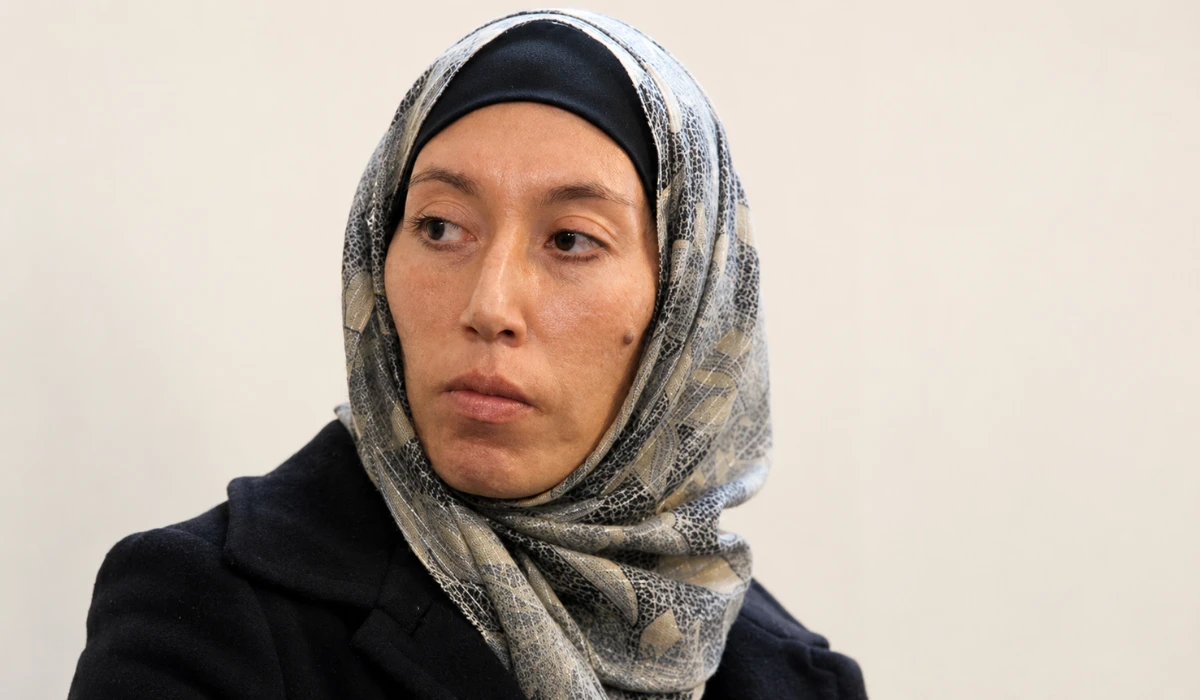
A Betrayal Built Over Years — Not Days
What makes the Witt case particularly alarming to national security analysts is that her defection was not impulsive. It was methodical, and it unfolded over several years while U.S. authorities watched — and missed their window.
The timeline below traces how an American intelligence officer became an Iranian asset:
|
|
|
|
|
|
|
|
|
|
|
|
|
|
|
|
|
|
|
|
|
|
|
|
|
|
|
|
|
|
|
|
|
What Classified Information Did She Allegedly Share?
According to the 2019 federal indictment, prosecutors allege that Witt's betrayal included disclosures that cut to the heart of American intelligence operations:
1. A highly classified intelligence collection program: Witt allegedly revealed the code name and secret mission of a classified Pentagon program. The full scope of the damage from this disclosure has not been made public.
2. The true identity of a U.S. intelligence officer: By unmasking an undercover American operative to Iranian authorities, Witt "risked the life of this individual," according to then-Assistant Attorney General John Demers, who announced the charges.
3. Dossiers on at least eight former U.S. government agents: After arriving in Tehran, Witt allegedly constructed detailed target packages on former colleagues — their identities, professional histories, and personal circumstances — which were then handed to Iranian cyber operators.
4. A sustained cyberattack campaign: Four Iranian nationals also charged in the indictment — Mojtaba Masoumpour, Behzad Mesri, Hossein Parvar, and Mohamad Paryar — allegedly used Witt's intelligence to conduct spear-phishing and social media impersonation attacks against American intelligence personnel between 2014 and 2015.
All of this, prosecutors allege, benefited Iran's Islamic Revolutionary Guard Corps (IRGC) — the elite paramilitary force responsible for intelligence collection, unconventional warfare, and supporting organizations that target American citizens and interests globally.
The Recruitment: How Iran Flipped a U.S. Spy
The operational mechanics of Witt's alleged recruitment followed what analysts describe as classical human intelligence (HUMINT) doctrine — targeting disillusioned insiders through ideological resonance and gradual trust-building.
A dual American-Iranian citizen, referred to only as "Individual A" in the indictment, served as Witt's spotter and handler — systematically assessing what information she could provide and deepening the relationship through 2012. By the time she formally defected, the relationship had evolved to the point where her handler joked about thanking the U.S. Secretary of Defense for training her so well.
Witt's alleged reply, reproduced in the indictment, has become one of the most cited lines in recent espionage literature: "I am endeavoring to put the training I received to good use instead of evil. Thanks for giving me the opportunity."
It is a chilling sentence — both for what it reveals about her state of mind and what it suggests about the IRGC's patient, long-game approach to recruiting insiders.
Why the FBI Is Acting Now — 13 Years Later
The timing of the reward announcement is not coincidental. The FBI stated explicitly that it believes this is a "critical moment in Iran's history" — a reference widely interpreted in relation to ongoing geopolitical volatility involving Iran, including U.S.-Iran tensions and recent military operations.
Daniel Wierzbicki, Special Agent in Charge of the FBI Washington Field Office's Counterintelligence and Cyber Division, stated: "The FBI has not forgotten and believes that during this critical moment in Iran's history, there is someone who knows something about her whereabouts."
Security experts note several reasons why this case remains urgent:
- Witt is believed to still be actively supporting Iranian intelligence operations, not merely a passive fugitive
- Her expertise in U.S. counterintelligence tradecraft gives her ongoing operational value to the IRGC
- Internal upheaval in Iran could loosen the regime's grip on assets like Witt, creating an opening for informants
What We Know About Witt Today
The FBI's current wanted profile describes Monica Witt as 5 feet 8 inches tall, approximately 145 pounds, with brown hair and hazel eyes. She has tattoos, including one on her left wrist. She is fluent in Farsi.
She is believed to be residing in Iran under the protection of the IRGC and may be using aliases, including Fatemah Zahra and Narges Witt.
After defecting, Iranian authorities reportedly provided her with housing and computer equipment to support her work for Tehran. She appeared on Iranian state media making anti-American statements following her defection and public conversion to Islam.
BREAKING: The FBI is offering a $200,000 reward for information leading to the apprehension and prosecution of Monica Witt, a former U.S. service member and counterintelligence agent accused of spying for Iran.
— I Meme Therefore I Am 🇺🇸 (@ImMeme0) May 15, 2026
She intentionally provided information endangering U.S. personnel… pic.twitter.com/OPGLwNr3n7
Why This Case Matters Beyond the Headlines
The Monica Witt case is not merely the story of one rogue officer. It is a blueprint for the insider threat problem that continues to haunt the U.S. intelligence community.
Witt was not a marginal figure — she was trained, cleared, deployed to active war zones, and trusted with access to special access programs. The fact that Iranian intelligence was able to identify, cultivate, and ultimately recruit her over the span of at least two years — while U.S. counterintelligence watched — raises uncomfortable institutional questions that have never been fully answered publicly.
Security analysts and former intelligence officials have pointed to her case as evidence of the need for stronger continuous evaluation programs — systems that monitor personnel with active clearances not just at initial vetting but throughout their careers.
Meanwhile, for former American intelligence officers who Witt allegedly helped to identify, the damage may be irreversible. Identities, once burned, cannot be unburned.
What Happens Next
The extradition of a fugitive from Iran is, practically speaking, impossible under current conditions — the United States has no extradition treaty with Iran and no formal diplomatic relations. The $200,000 reward is therefore less about the mechanics of arrest and more about intelligence gathering: the FBI wants to know where she is, who she is meeting with, and what she is still doing.
A tip — from a disgruntled Iranian official, a defector, a foreign contact — could provide leverage for covert action, diplomatic negotiation, or simply the documentation of ongoing damage to U.S. national security.
Anyone with information is urged to contact the FBI at 1-800-CALL-FBI, submit a tip at tips.fbi.gov, or contact the nearest American embassy or consulate


