
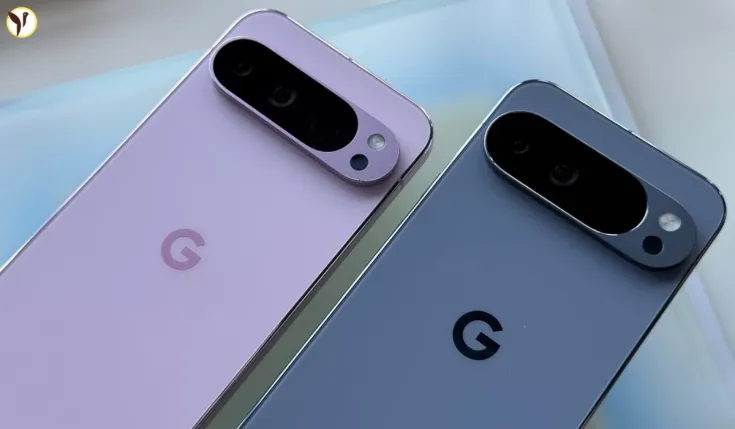

The Google Pixel 11 series — still months from its expected August launch — has just had its curtain pulled back in one of the most comprehensive pre-launch leaks in recent smartphone history. Tipster Mystic Leaks dropped what they themselves called a "nuke" on Telegram, detailing everything from Tensor G6 silicon specs to a surprising new design feature that replaces a much-debated sensor. Here is everything you need to know, what it really means, and where things still remain uncertain.
The Tensor G6: Google Finally Solves Its Chip Problem
If there is one headline from this leak that could genuinely shift consumer sentiment toward Pixel, it is this: Google is moving the Tensor G6, codenamed "Malibu," to TSMC's cutting-edge 2nm (N2) manufacturing node, featuring a high-performance core capable of reaching 4.11 GHz.
This is a significant pivot. Previous Tensor chips — from G1 through G4 — were built on Samsung's foundries and attracted persistent criticism for thermal throttling and power efficiency. Moving to TSMC's 2nm process, the same node used by Apple's A18 Pro, directly addresses that core weakness.
The architecture runs a 1+4+2 core configuration using newer ARM C1 cores, a PowerVR C-Series CXTP-48-1536 GPU, Google's updated Titan M3 security chip, and a MediaTek M90 modem — ditching Samsung's Exynos modems after years of use.
The MediaTek modem swap is particularly noteworthy for Indian buyers, where 5G band compatibility and call quality have been recurring complaints with past Pixel models.
One caveat worth flagging: the PowerVR C-Series GPU choice has drawn skepticism from analysts, as it is essentially a five-year-old graphics architecture. Google may be betting that its AI workloads are handled more by the new "Santafe" TPU and "Metis" imaging processor than raw GPU power — but mobile gaming performance could remain a weak point.
Camera Overhaul: New Sensors Across the Line
The camera system is getting its most significant hardware refresh in several generations. The base Pixel 11 will get a new main sensor codenamed "Chemosh," believed to be a 50MP sensor. The Pixel 11 Pro and Pro XL, meanwhile, would pick up new "Bastet" and "Barghest" sensors for the main and telephoto cameras. The Pixel 11 Pro Fold shares the Chemosh main sensor with the base model.
The codenames are mythological — Chemosh was a Moabite deity, Bastet an Egyptian cat goddess — a tradition Google has quietly maintained in its hardware development. What the codenames don't reveal, however, is resolution or aperture data. At this stage, it's confirmed hardware is changing; the exact performance gains remain to be seen.
What makes this notable: Google doesn't swap camera sensors frequently. Each generation usually inherits much of the prior imaging stack. The fact that sensors are being replaced across multiple models simultaneously suggests this isn't a minor bump — it could be a generational step forward in low-light capture and zoom fidelity.
"Pixel Glow" Is the Most Controversial Design Change
One notable change is the removal of the thermometer sensor on Pro variants. Instead, Google may introduce a compact RGB LED array dubbed "Pixel Glow" in the camera bar, offering a visual element similar to Nothing's glyph-style lighting.
Android 17 Beta 4 revealed the "Pixel Glow" feature — an LED notification system that pulses color and subtle light from the back of the device, communicating alerts and status updates.
The thermometer sensor, introduced with the Pixel 8 Pro and continued through the 9 and 10 Pro, was always a divisive feature. In practice, most reviewers found it accurate but limited in daily utility. Replacing it with an ambient LED system that could tie into Gemini AI interactions is a more design-forward choice — though it will disappoint users who valued health monitoring integration.
Whether "Pixel Glow" feels like a genuine feature or a gimmick will depend almost entirely on software execution. Nothing's Glyph interface took several software generations to feel truly purposeful. Google will need to nail the AI-driven logic behind it from day one.
Pixel 11 Pro Fold: Thinner, Refined — But With a Battery Concern
The Pixel 10 Pro Fold measured 10.8mm thick when folded; the Pixel 11 Pro Fold will apparently come in at 10.1mm — a meaningful 0.7mm reduction that could significantly improve pocket comfort.
The camera module has also been refined. The LED flash and microphone are now integrated within the pill-shaped oval section of the camera island, rather than being positioned outside the housing, and the transition between the camera island and the rear panel is now smoother.
However, Android Authority flagged a real concern: the Pixel 11 Pro Fold could get a battery with a minimum capacity of 4,658 mAh, which would represent a downgrade from its predecessor. Combined with the possible drop to 12GB RAM (down from the 16GB standard set by Pixel 9 Pro), the Fold's spec sheet has at least two areas that will require closer scrutiny when official numbers are confirmed.
Display Upgrades: Where Google Is Genuinely Pushing Forward
Google is pushing brightness to the limit with Pro models reaching 3,600 nits peak brightness, paired with 240Hz PWM for significantly better eye comfort. PWM (Pulse Width Modulation) at higher frequencies is meaningfully better for users who experience eye strain from OLED flicker — a real-world benefit that tends to get buried beneath headline specs.
The Pixel 11 Pro XL comes with a 6.8-inch OLED panel at 1344×2992 resolution, 120Hz refresh rate, 240Hz PWM, and 2,450 nits peak brightness, paired with either 12 or 16GB of RAM and a 5,000 mAh battery.
The specification comparison table above summarizes all key leaked figures across the three main models, with notable upgrades and downgrades highlighted.
What's NOT Coming: Project Toscana Delayed
Google reportedly won't include its under-display face unlock technology, "Project Toscana," in the Pixel 11 lineup this year, as the hardware is not ready for launch. This was anticipated by several analysts and is not a surprise — under-display IR face unlock at the quality level of Face ID remains a manufacturing challenge for Android OEMs broadly. It may appear in the Pixel 12 generation.
What Happens Next
Google's "Made by Google" hardware event has historically landed in late August or early September. If that pattern holds, an August 2026 reveal is the working assumption. Between now and then, expect:
- Official teasers from Google's hardware team, likely beginning in July
- Hands-on renders from reliable sources as final hardware is locked
- India pricing confirmation — early estimates place the base Pixel 11 around ₹84,999
- Gemini AI integration details, which Google will almost certainly position as the headline feature alongside camera improvements
MAJOR Pixel 11 Leak
— Piyush Bhasarkar (@TechKard) May 4, 2026
🔹 Tensor G6 Chipset:
- 1+4+2 ARM C1 core config
- PowerVR C-Series GPU
- New Titan M3 security chip
- MediaTek M90 modem (no more Samsung Exynos!)
- New TPU & custom GXP ISP
📸 Camera Upgrades:
- Pixel 11 & Pro Fold: New 50MP "chemosh" sensor… pic.twitter.com/hOhAOSzMOe
The Bottom Line: Should You Wait?
The Pixel 11 leak paints a picture of a generation defined by silicon ambition (TSMC 2nm, MediaTek modem), iterative design polish, and a camera hardware refresh that is real but not yet fully quantified. The "Pixel Glow" LED system is either a genuinely creative differentiator or an overengineered notification light — software will decide that.
The Pro Fold's battery and possible RAM reductions are the only genuine alarm bells in this otherwise solid-looking lineup. If those numbers are confirmed at launch without a price correction, that's a harder sell in a category where Samsung and the incoming iPhone Fold are applying real competitive pressure.
For Pixel 9 or older users, the combination of a new chip architecture, new camera sensors, and a brighter display makes a compelling upgrade case. For Pixel 10 owners, the smarter move is to wait for hands-on reviews before committing.


